

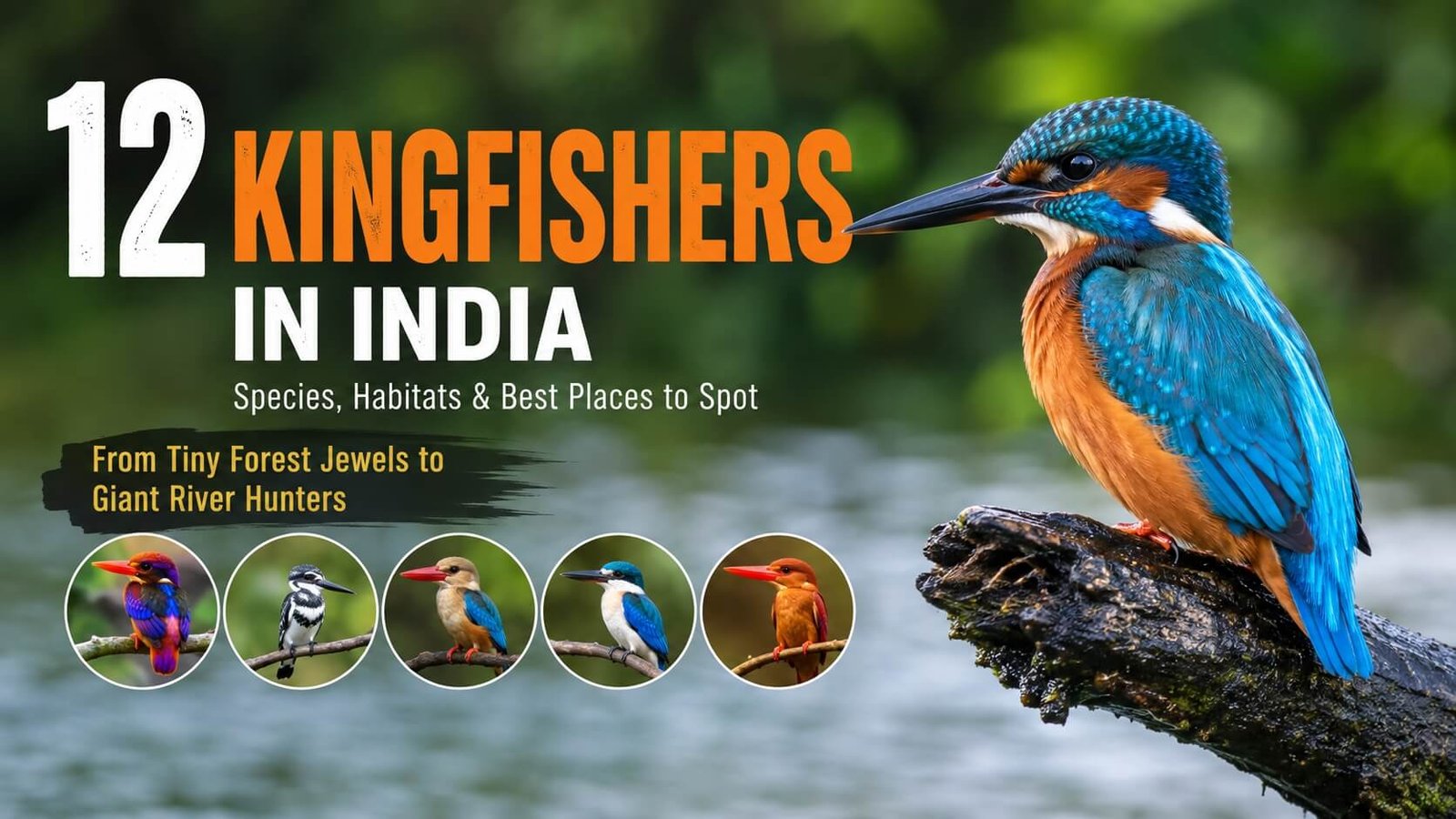
India is a dream destination for birdwatchers, and among its most fascinating birds are kingfishers. Their brilliant plumage, oversized bills and remarkable hunting abilities make them some of the most exciting birds to encounter in the wild.
While the familiar White-throated Kingfisher can appear in gardens, fields and even urban areas, other species live in dense forests, Himalayan streams, coastal wetlands and mangrove ecosystems.
India’s kingfisher diversity is particularly interesting because different species have adapted to very different habitats. The India Checklist includes species ranging from the tiny Oriental Dwarf Kingfisher to the much larger Stork-billed Kingfisher.
Kingfishers You Can Spot Across India
If you enjoy wildlife photography or birding, here are 12 remarkable kingfishers to look for across India.
1. White-throated Kingfisher
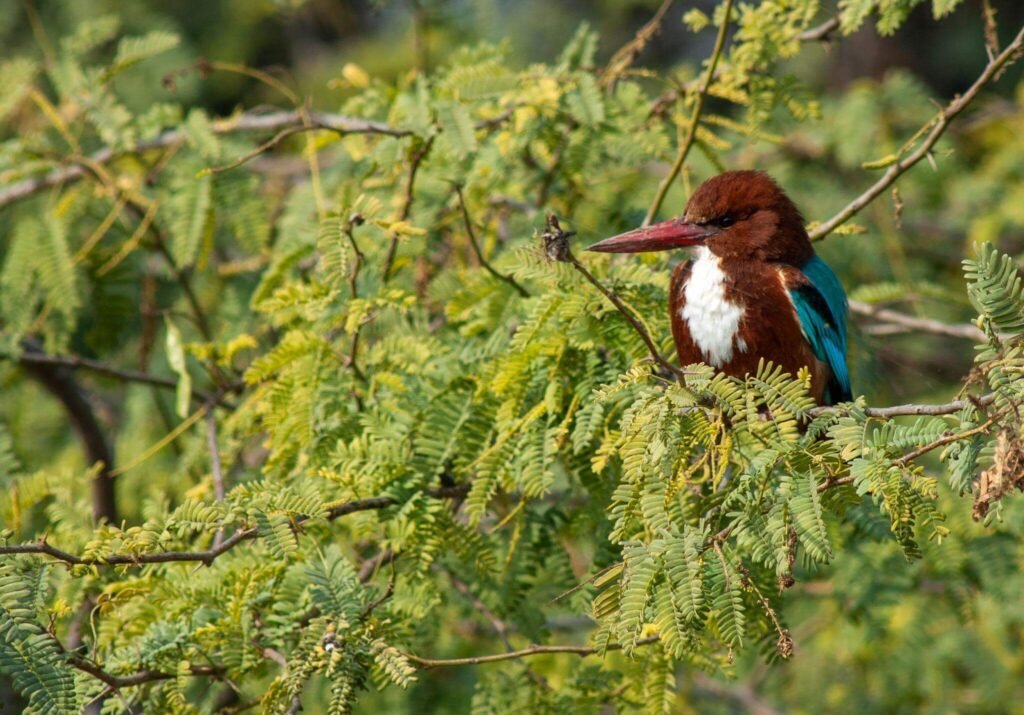
The White-throated Kingfisher is probably the easiest kingfisher to encounter in India. Its vivid blue wings, chocolate-brown head, white throat and large red bill make it instantly recognisable.
Unlike many kingfishers, it isn’t dependent on water. It can hunt around agricultural fields, gardens, grasslands, wetlands and urban areas. Its diet may include fish, frogs, lizards, insects and other small prey.
Where to look: Almost across India, particularly around gardens, farmland, wetlands and open countryside.
Birdwatching tip: Look for a solitary bird sitting on exposed branches, wires or poles before making a sudden dive toward its prey.
2. Common Kingfisher

Small, brilliantly coloured and incredibly fast, the Common Kingfisher is closely associated with freshwater habitats.
Its blue-green upperparts and orange underparts can appear especially striking when sunlight catches its feathers. It typically waits quietly on a low perch before plunging into the water to catch small fish and aquatic prey.
Where to look: Bharatpur, Goa, riverbanks, freshwater wetlands and other suitable water bodies across India.
For photographers, calm freshwater habitats with exposed branches can provide excellent opportunities to observe its hunting behaviour.
3. Pied Kingfisher
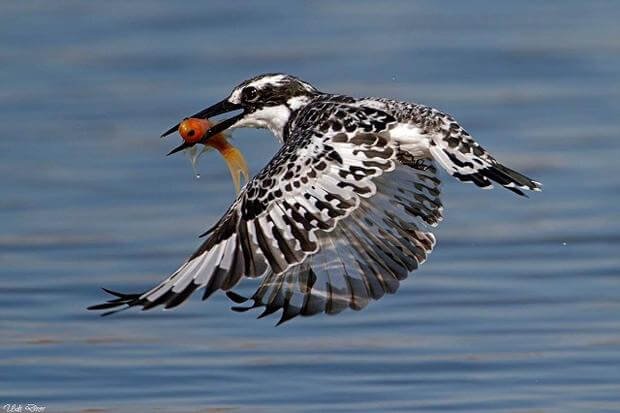
The Pied Kingfisher proves that a kingfisher doesn’t have to be brightly coloured to be spectacular.
Its contrasting black-and-white plumage makes it easy to recognise, but its hunting technique is perhaps even more impressive. It can hover above the surface of water before diving down to catch prey.
It usually remains close to rivers, lakes and wetlands.
Where to look: Bharatpur, Chilika Lake and major rivers and wetlands.
Best moment to watch: Keep an eye on the sky above water. A hovering bird suddenly dropping toward the surface may be a Pied Kingfisher hunting.
4. Stork-billed Kingfisher
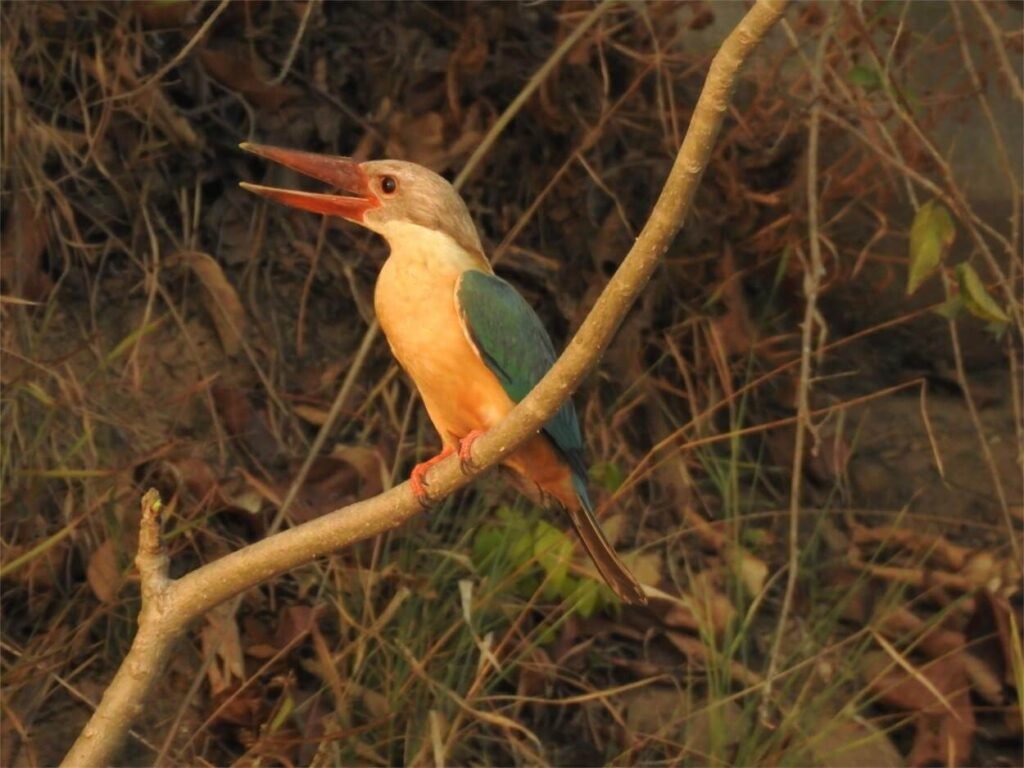
Large, powerful and unmistakable, the Stork-billed Kingfisher is one of India’s most impressive kingfishers.
Its enormous red bill gives the species its name. Greenish-blue wings, a brown head and pale underparts create a distinctive appearance.
It occupies a variety of aquatic environments, including rivers, lakes, pools and forest streams, and its substantial size allows it to tackle prey that smaller kingfishers may not attempt.
Where to look: Western Ghats, Himalayan foothills, Northeast India and suitable rivers and wetlands.
5. Oriental Dwarf Kingfisher
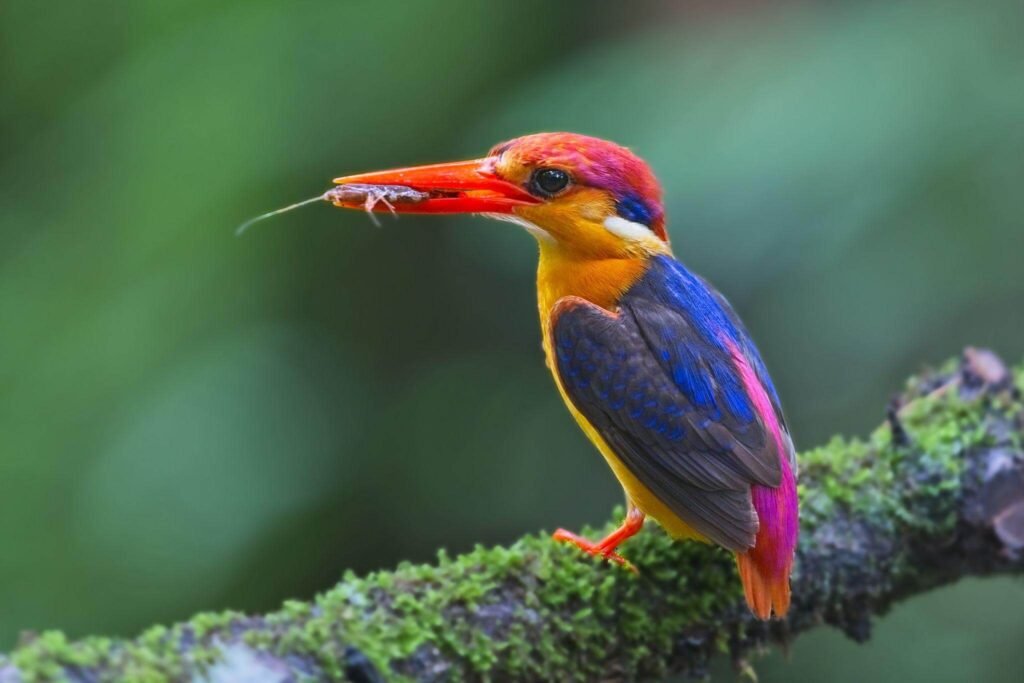
Tiny, colourful and notoriously elusive, the Oriental Dwarf Kingfisher is one of India’s most exciting forest birds to find.
Its vivid combination of orange, blue and violet makes it look almost unreal when it appears through dense vegetation. Instead of open lakes and large rivers, it prefers forested areas and shaded streams.
The species is particularly associated with forest habitats in parts of western and southern India, and birdwatchers often search for it during the monsoon period.
Where to look: Forest streams and evergreen forests of Goa and the Western Ghats, including parts of Karnataka and Kerala.
Why it’s special: Finding this tiny bird in dense forest can feel like discovering a hidden jewel.
6. Blue-eared Kingfisher
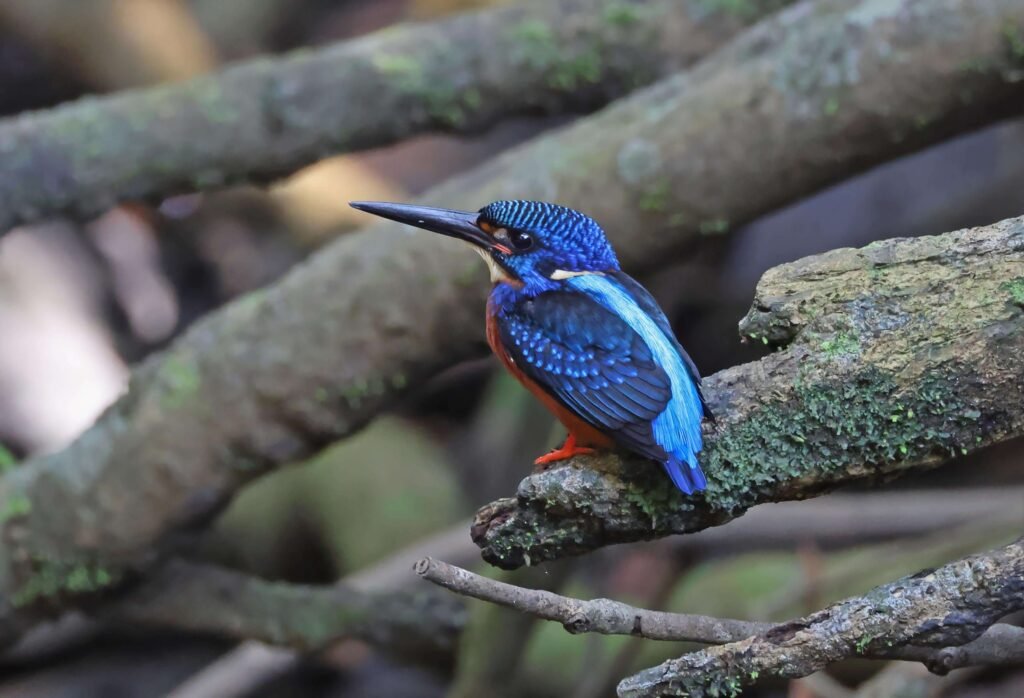
The Blue-eared Kingfisher is another secretive species that prefers shaded forest streams rather than exposed urban wetlands.
Its dark blue and blackish plumage can blend remarkably well with the shadows beneath a forest canopy, while its reddish-orange underparts provide a striking contrast.
It is associated with tropical and subtropical forest habitats and can be found near shaded watercourses.
Where to look: Parts of the Western Ghats and Northeast India.
Birding challenge: Patience is essential. Walking slowly along quiet forest streams can increase your chances of spotting one.
7. Blyth’s Kingfisher

For serious birdwatchers, the Blyth’s Kingfisher is a particularly exciting species.
It is a rare kingfisher associated with forest streams and wetlands in Northeast India. Its dark upperparts, blue markings and warm-toned underparts give it a distinctive appearance.
The species has a restricted distribution in India, particularly around the foothills of Arunachal Pradesh and neighbouring areas. It is also classified as Near Threatened, making sightings especially valuable for birders and conservationists.
Where to look: Arunachal Pradesh and nearby parts of Northeast India.
Why birders seek it: Its rarity, restricted range and forest habitat make it one of India’s more challenging kingfishers to find.
8. Crested Kingfisher
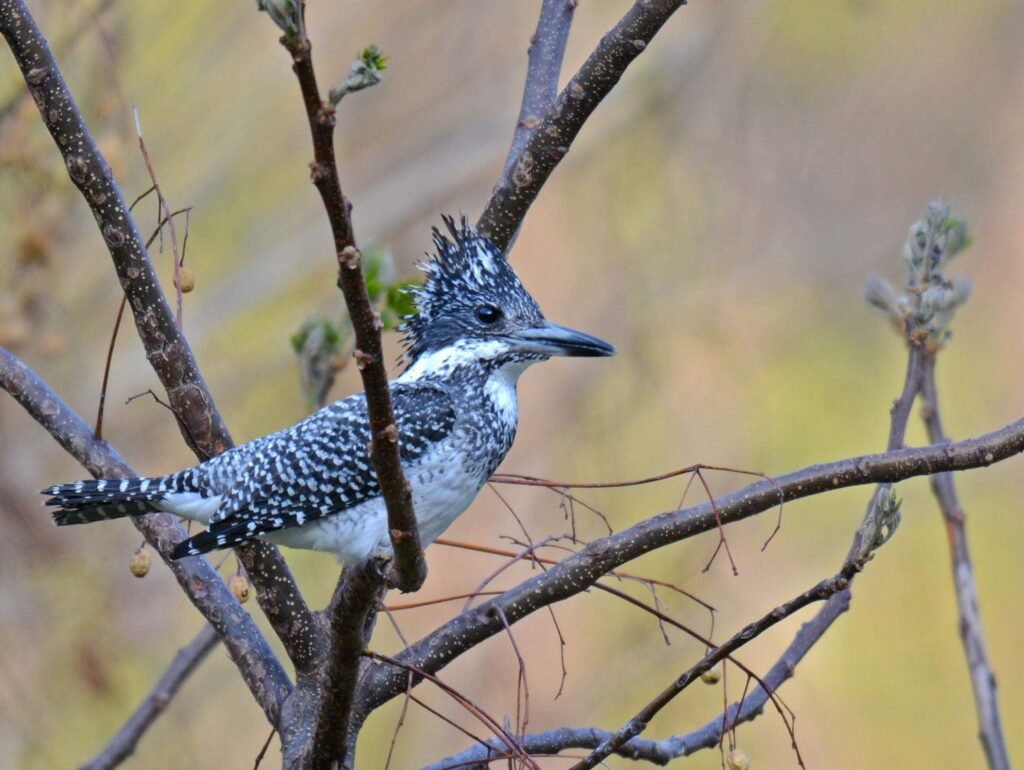
Move from tropical forests to the mountains and you enter the territory of another remarkable bird: the Crested Kingfisher.
Large and strongly patterned, this black-and-white kingfisher has a prominent shaggy crest. It is closely associated with mountain rivers and fast-flowing streams.
Where to look: Himalayan regions including Uttarakhand, Himachal Pradesh, Sikkim and parts of Northeast India.
A Himalayan birding trip along suitable mountain streams can provide an opportunity to encounter this unusual species.
9. Black-capped Kingfisher
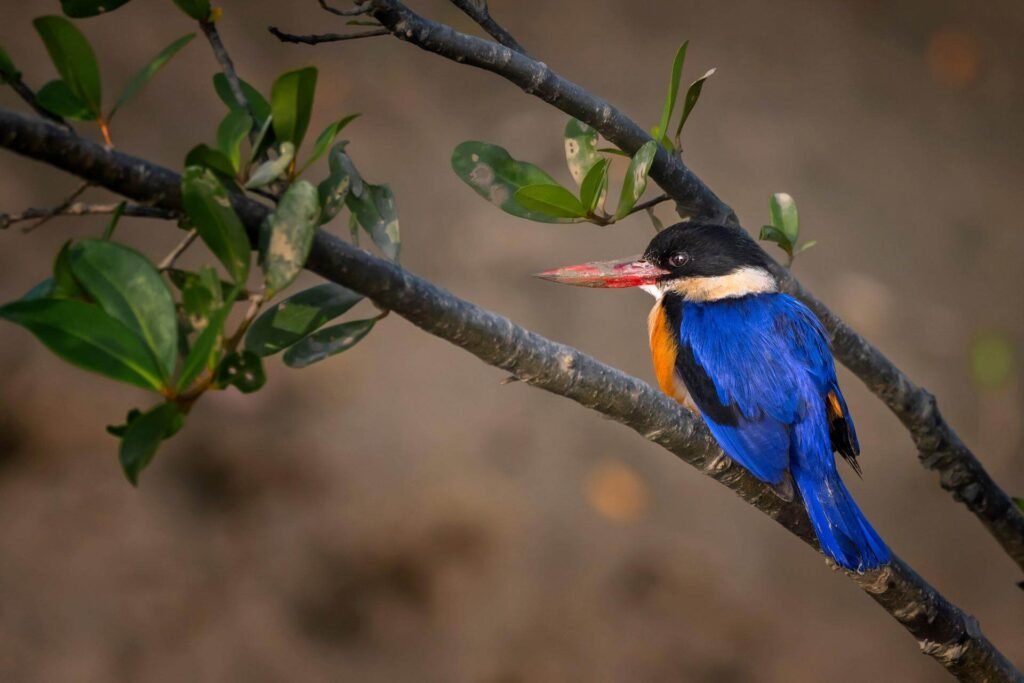
The Black-capped Kingfisher takes us from mountain streams to India’s coastal landscapes.
Its black crown, white collar, blue wings and large red bill create a striking combination. Unlike kingfishers commonly associated with freshwater ponds, this species is strongly linked with coastal environments.
It can inhabit mangroves, estuaries, mudflats and coastal wetlands.
Where to look: India’s coastal wetlands, estuaries and mangrove habitats.
For travellers interested in combining wildlife photography with coastal exploration, mangrove ecosystems can be particularly rewarding.
10. Brown-winged Kingfisher
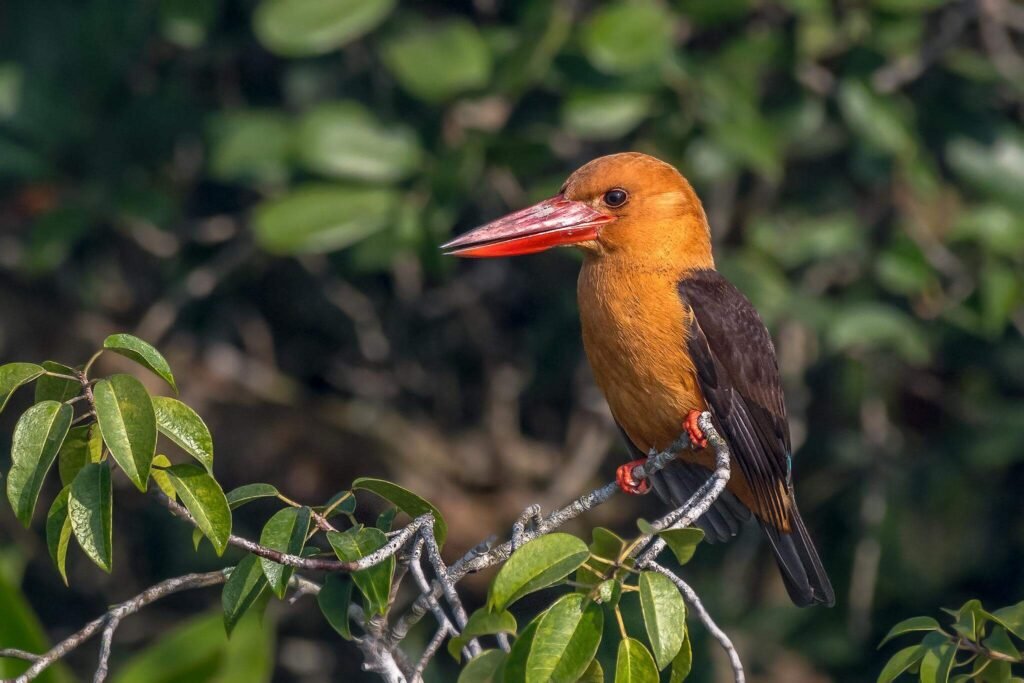
The Brown-winged Kingfisher is one of India’s specialist mangrove birds.
It is a large kingfisher with a powerful bill and brown wings, adapted to life around tidal waterways and mangrove forests.
The Sundarbans of West Bengal is one of the key places for birdwatchers hoping to encounter this species.
Mangrove loss, changes in freshwater availability and declining fish resources can put pressure on species dependent on these ecosystems.
Where to look: Sundarbans and suitable mangrove habitats along India’s eastern coast.
11. Collared Kingfisher
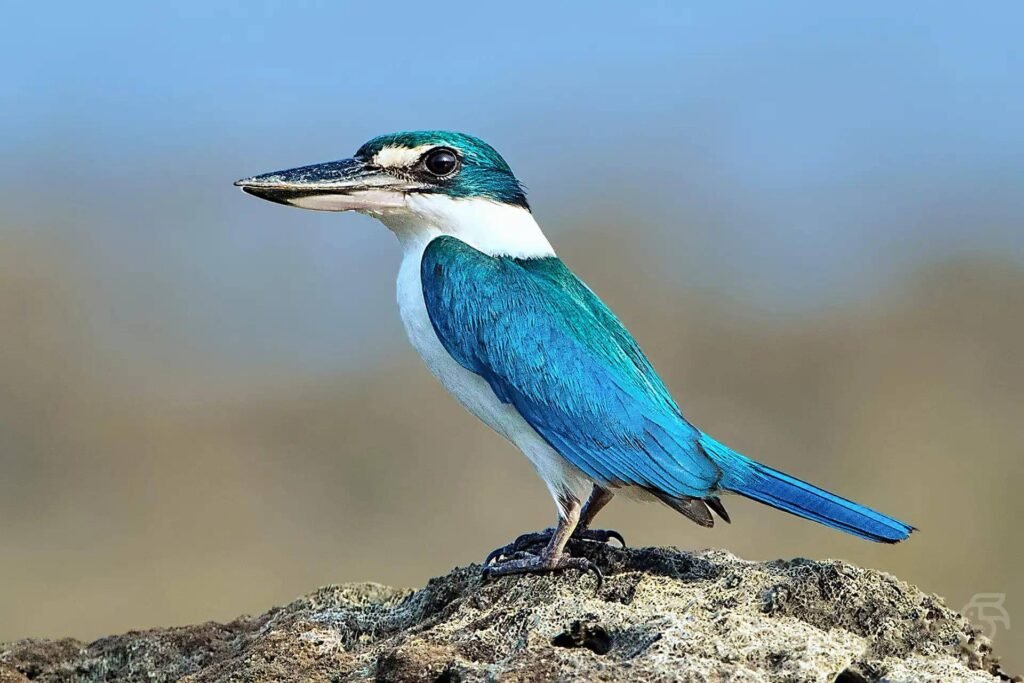
The Collared Kingfisher is another species that takes birdwatchers toward India’s tropical islands and coastal environments.
It can inhabit coastal woodland, mangroves and areas close to beaches. In India, the Andaman and Nicobar Islands are particularly important for those hoping to see this species.
Where to look: Coastal forests, mangroves and other suitable habitats of the Andaman and Nicobar Islands.
Island birding can be especially rewarding because several coastal and forest species occur in habitats that are very different from mainland India.
12. Ruddy Kingfisher
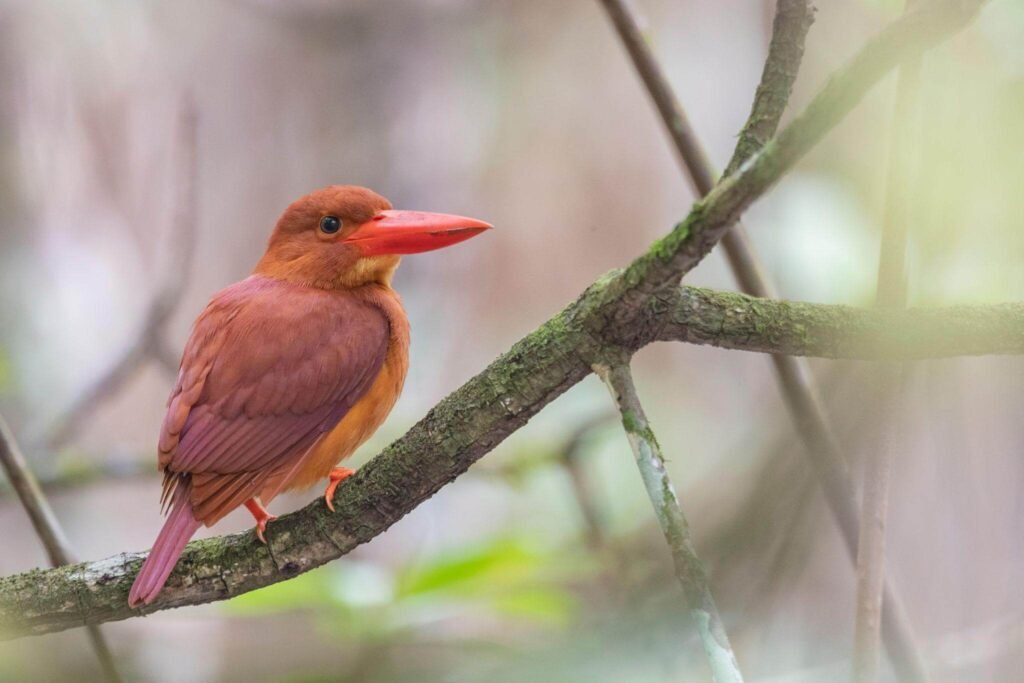
The Ruddy Kingfisher is one of the more unusual birds on this list.
Its reddish-orange plumage immediately separates it from the familiar blue kingfishers many people associate with the group. It is a forest-associated species and isn’t the sort of bird you would normally expect to encounter around an ordinary city pond.
Where to look: Parts of Northeast India and the Andaman and Nicobar Islands.
For birdwatchers exploring these regions, spotting a Ruddy Kingfisher can become one of the highlights of the trip.
Where to Go Kingfisher Watching in India
India’s geographical diversity means that kingfisher watching can become an entire travel experience.
Bharatpur and North Indian Wetlands
Wetlands around Bharatpur and other northern regions are excellent for observing water-associated species such as Common and Pied Kingfishers.
Western Ghats
The forests and streams of the Western Ghats provide opportunities to search for forest specialists such as the Oriental Dwarf and Blue-eared Kingfishers.
Northeast India
Arunachal Pradesh and surrounding areas are particularly important for birders looking for difficult species such as Blyth’s Kingfisher.
Himalayan Region
Mountain rivers and streams in Uttarakhand, Himachal Pradesh and Sikkim offer a very different birding environment, with species such as the Crested Kingfisher associated with these landscapes.
Sundarbans
The mangrove ecosystem of the Sundarbans is particularly interesting for coastal kingfishers, including the Brown-winged Kingfisher.
Andaman and Nicobar Islands
The islands provide opportunities to explore coastal and forest habitats while searching for species such as the Collared and Ruddy Kingfishers.
Best Tips for Photographing Kingfishers
Kingfishers can be surprisingly difficult to photograph because they often sit motionless before making an incredibly fast move.
Keep your distance: Avoid approaching birds too closely or disturbing their feeding areas.
Watch the perches: Kingfishers frequently use the same branches, rocks or other elevated spots to scan for prey.
Be patient: Instead of constantly moving around, spend time observing one promising location.
Use natural light: Early morning and late afternoon generally provide softer light for wildlife photography.
Don’t disturb nesting birds: Never approach nests or breeding sites simply for a photograph.
Respect the habitat: Avoid damaging vegetation or entering restricted areas while trying to obtain a better view.
Why Kingfishers Matter to India’s Ecosystems
Kingfishers are more than beautiful subjects for wildlife photographers. They are closely connected with aquatic and forest ecosystems, and their presence can reflect the health of the habitats where they live.
Water pollution, habitat destruction, forest fragmentation and changes to wetland and mangrove ecosystems can affect bird populations. Conservation of rivers, wetlands, forests and coastal habitats therefore benefits not just kingfishers but entire communities of wildlife.
A Colourful Side of India’s Birdlife
From the familiar White-throated Kingfisher sitting beside a village field to the elusive Blyth’s Kingfisher hidden along a Northeast Indian stream, India’s kingfishers demonstrate just how diverse the country’s landscapes are.
Some are easy to spot. Others require hours of patient searching. Some live around freshwater, while others depend on forests, mountain rivers or mangrove ecosystems.
That variety is what makes kingfisher watching so rewarding. You don’t simply search for a bird—you explore an entire ecosystem while looking for it.
For travellers interested in wildlife and nature, these 12 species offer another reason to explore India’s wetlands, forests, mountains, islands and mangrove landscapes.
FAQs About Kingfishers in India
How many kingfisher species are found in India?
India is home to a diverse range of kingfishers, including species associated with freshwater wetlands, rivers, forests, mountains, mangroves and coastal habitats.
Which is the most common kingfisher in India?
The White-throated Kingfisher is among the most commonly encountered kingfishers in India. It can be seen in wetlands as well as fields, gardens, villages and urban areas.
Where is the best place to see kingfishers in India?
Good birdwatching locations include Bharatpur, the Western Ghats, Northeast India, Himalayan rivers, the Sundarbans and the Andaman and Nicobar Islands.
Which kingfisher is the smallest in India?
The Oriental Dwarf Kingfisher is one of India’s smallest kingfishers. It is a colourful but elusive forest bird, usually found around shaded streams and dense vegetation.
Can kingfishers be found away from water?
Yes. Although many kingfishers are strongly associated with water, species such as the White-throated Kingfisher can hunt insects, reptiles and other prey in fields, gardens and open landscapes.
Which kingfisher can hover above water?
The Pied Kingfisher is well known for hovering over water before diving to catch prey.
Where can I spot the Oriental Dwarf Kingfisher?
The Oriental Dwarf Kingfisher can be searched for in forested areas of the Western Ghats and parts of southern and northeastern India, particularly near shaded streams.
Which kingfishers are found in the Sundarbans?
The Brown-winged Kingfisher and Black-capped Kingfisher are among the species associated with India’s coastal and mangrove habitats, including the Sundarbans region.
Are kingfishers good subjects for wildlife photography?
Yes. Their vibrant plumage and dramatic hunting behaviour make them excellent photography subjects. However, photographers should maintain a safe distance and avoid disturbing feeding or nesting birds.
What is the best time to photograph kingfishers?
Early morning and late afternoon are generally good periods for wildlife photography because the softer natural light can produce better detail and colour.
What do kingfishers eat?
Depending on the species, kingfishers may eat fish, aquatic insects, frogs, crustaceans, lizards and other small animals. Their diet varies according to habitat and prey availability.
Why are kingfishers important to India’s ecosystems?
Kingfishers are part of aquatic, forest and coastal food webs. Protecting the wetlands, rivers, forests and mangroves they depend on also helps conserve many other species sharing these habitats.
