

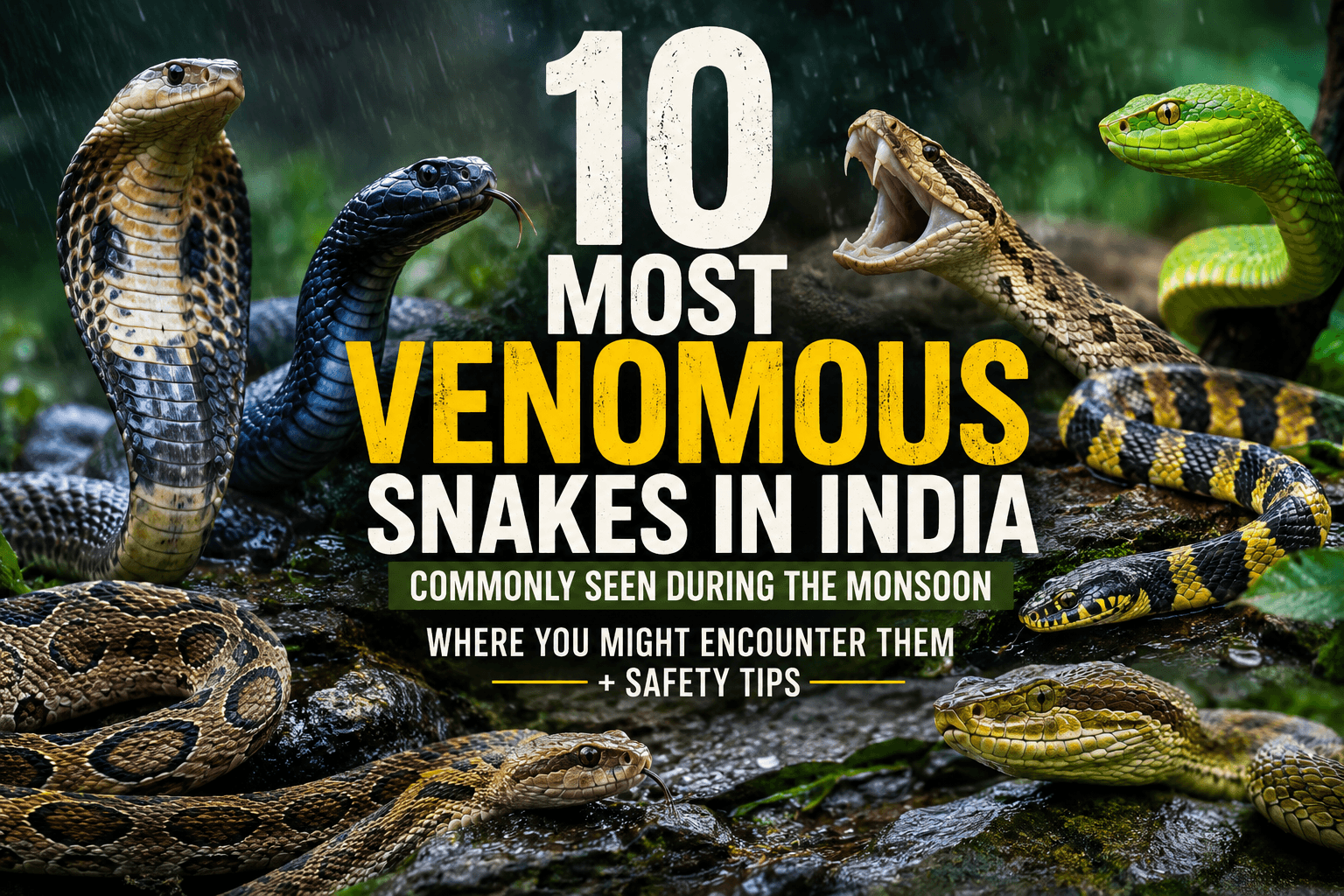
The arrival of the monsoon transforms India’s landscapes into lush green forests, overflowing rivers, and thriving wetlands. While the rainy season brings relief from the summer heat, it also marks a period when encounters with snakes become far more common. Heavy rainfall often floods underground burrows, forcing snakes to seek dry shelter in gardens, farms, roadsides, and sometimes even residential areas.
India is home to more than 300 species of snakes, but only a small percentage are venomous. Nevertheless, understanding which species are dangerous and where they are commonly found can help travelers, hikers, photographers, and local residents stay safe during the rainy season.
Most Venomous Snakes in India
Here are ten of the most venomous snakes in India that are frequently spotted during the monsoon and the habitats where you’re most likely to encounter them.
Indian Cobra (Naja naja)
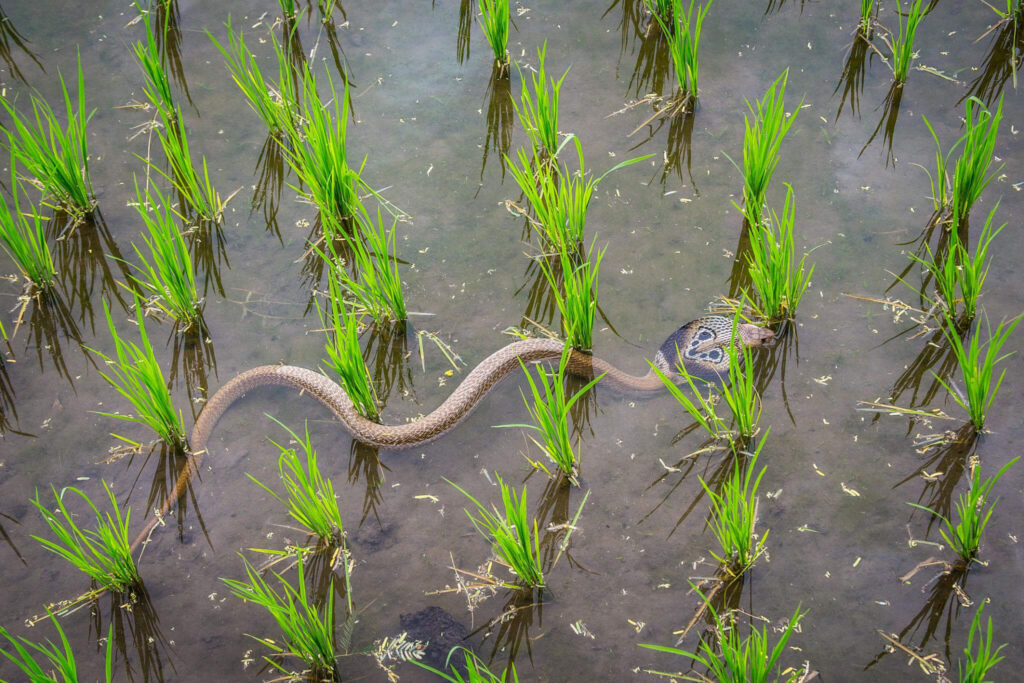
The Indian Cobra is among the country’s most recognizable snakes and is one of the famous “Big Four” responsible for the majority of serious snakebite cases in India.
Its distinctive hood, often marked with a spectacle-shaped pattern, makes it instantly identifiable. During the monsoon, Indian Cobras leave flooded burrows and are frequently seen near villages, farms, gardens, and open fields.
Where You May Encounter It
- Agricultural fields
- Village outskirts
- Gardens
- Near water bodies
- Old buildings
Interesting Facts
- Can raise nearly one-third of its body while displaying its hood.
- Feeds primarily on rodents, frogs, and other snakes.
- Plays an important role in controlling rodent populations.
Common Krait (Bungarus caeruleus)
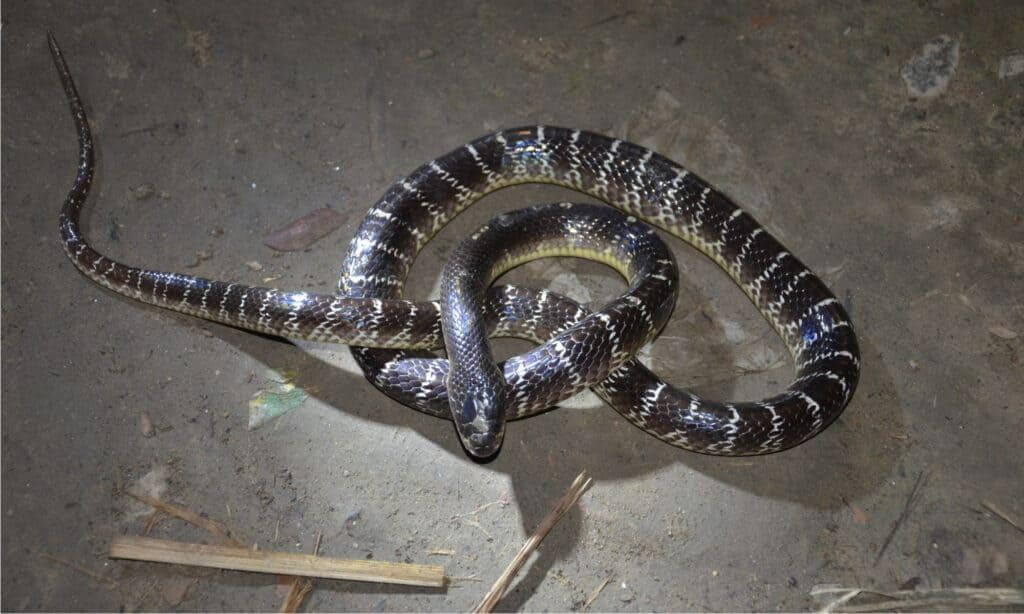
The Common Krait is one of India’s most dangerous snakes because of its powerful neurotoxic venom. Unlike many snakes, it is highly nocturnal and often enters homes while searching for rodents or shelter.
Its bite is usually painless, causing many victims to underestimate its severity until symptoms become life-threatening.
Where You May Encounter It
- Rural homes
- Grain storage areas
- Agricultural fields
- Villages
- Near piles of bricks or firewood
Interesting Facts
- Mostly active after sunset.
- Prefers hiding during the day.
- Feeds on other snakes, lizards, and rodents.
Russell’s Viper (Daboia russelii)
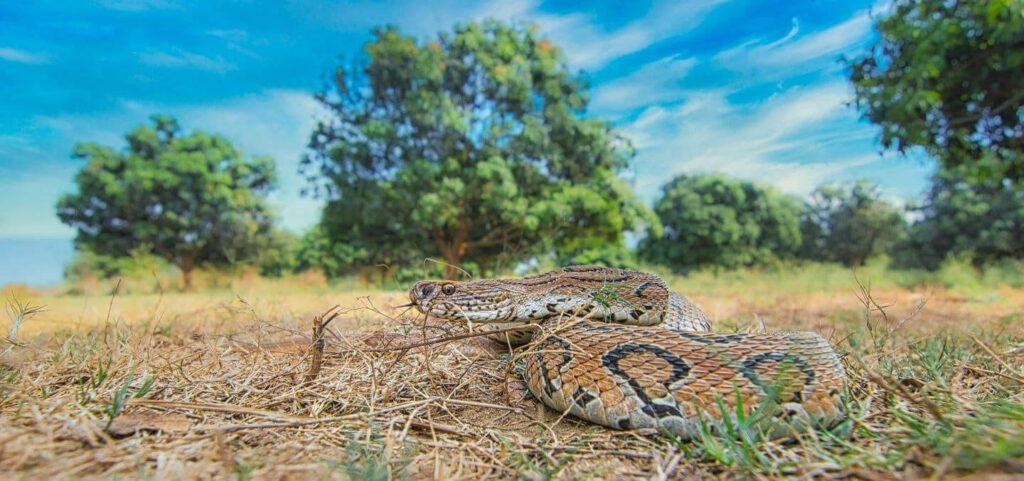
Russell’s Viper is another member of India’s “Big Four.” Its excellent camouflage allows it to blend perfectly with dry grass and agricultural fields, making accidental encounters common.
During monsoon farming activities, this snake is frequently spotted in crop fields where rodents are abundant.
Where You May Encounter It
- Rice fields
- Grasslands
- Farms
- Shrublands
- Rural pathways
Interesting Facts
- Produces a loud warning hiss.
- One of the heaviest-bodied vipers in India.
- Often remains motionless, relying on camouflage.
Saw-scaled Viper (Echis carinatus)
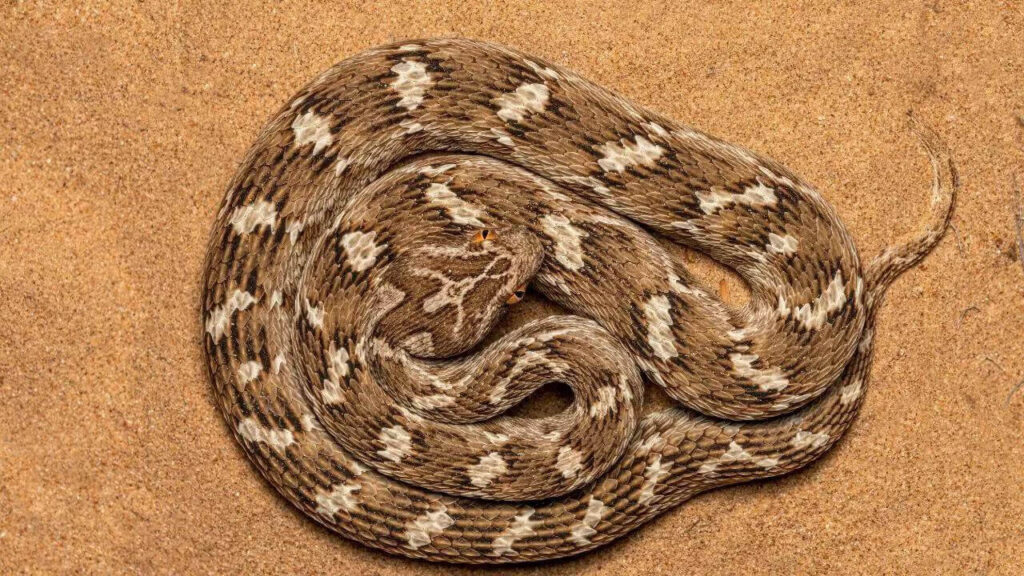
Although relatively small, the Saw-scaled Viper is considered extremely dangerous due to its aggressive defensive behavior and potent venom.
When threatened, it rubs its scales together, producing a distinctive rasping sound that serves as a warning.
Where You May Encounter It
- Rocky terrain
- Dry scrub forests
- Semi-arid regions
- Village outskirts
- Sandy landscapes
Interesting Facts
- Usually less than two feet long.
- Highly active during evenings.
- Excellent camouflage among rocks.
King Cobra (Ophiophagus hannah)
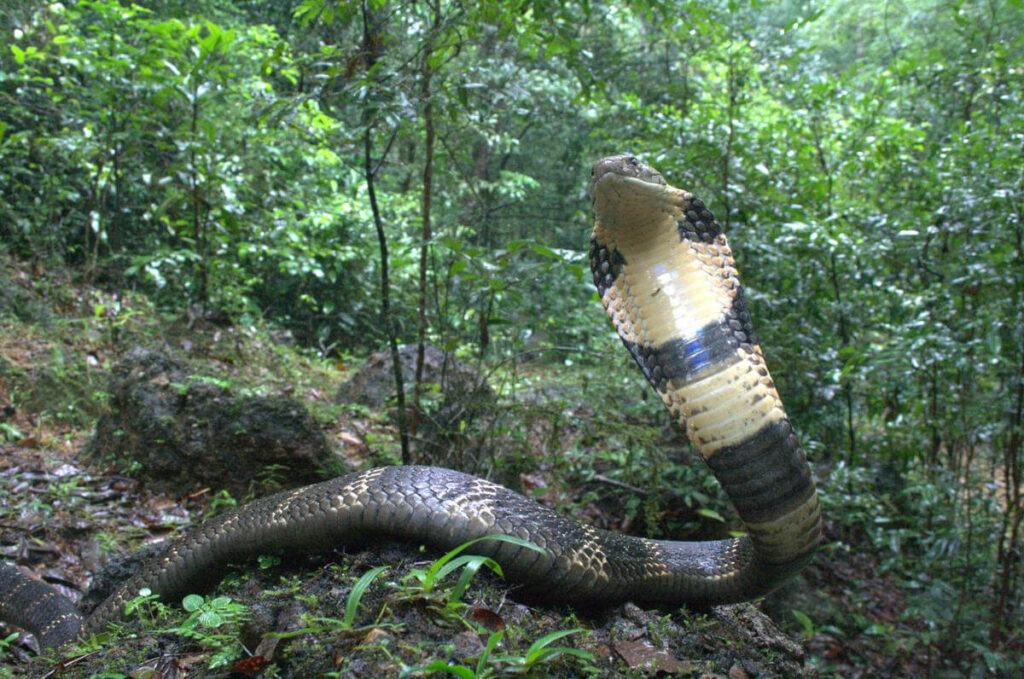
The King Cobra is the world’s longest venomous snake, capable of reaching lengths exceeding 5 meters (16 feet).
Despite its intimidating appearance, it generally avoids humans and prefers dense forests.
Monsoon months increase sightings as forest trails become wetter and prey becomes more active.
Where You May Encounter It
- Western Ghats
- Northeast India
- Dense rainforests
- Forest reserves
- Bamboo forests
Interesting Facts
- Primarily feeds on other snakes.
- Builds nests for its eggs.
- Highly intelligent and alert.
Banded Krait (Bungarus fasciatus)
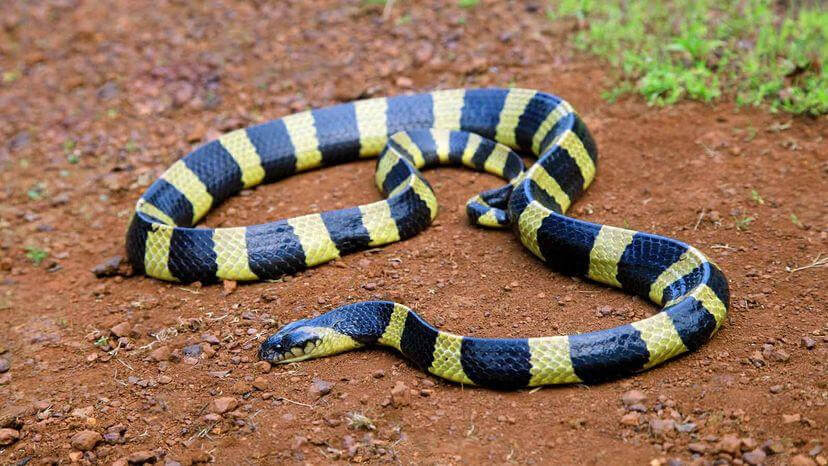
The Banded Krait is easy to identify because of its striking yellow-and-black bands.
Although generally shy and reluctant to bite, it possesses powerful neurotoxic venom.
Where You May Encounter It
- Wetlands
- Rice paddies
- Forest edges
- Marshes
- Eastern India
Interesting Facts
- Mostly nocturnal.
- Excellent swimmer.
- Rarely aggressive unless provoked.
Monocled Cobra (Naja kaouthia)
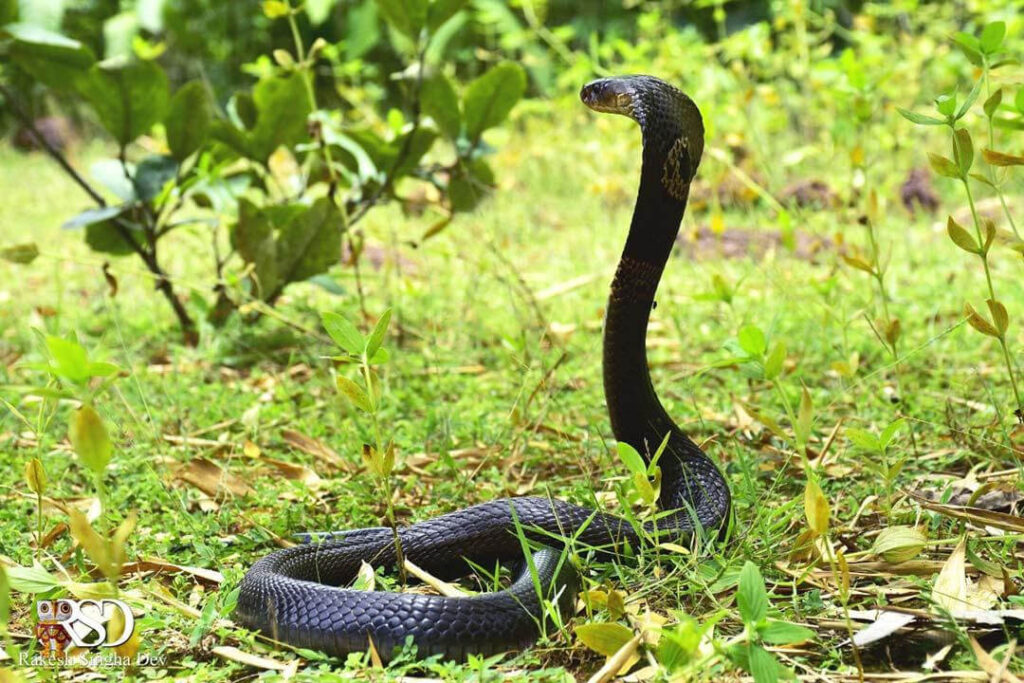
Named after the circular “monocle” marking on its hood, this cobra is common across eastern and northeastern India.
It adapts well to human settlements where rodents are plentiful.
Where You May Encounter It
- Paddy fields
- Villages
- Forest edges
- Wetlands
- Gardens
Interesting Facts
- Excellent climber.
- Often active during dusk.
- Hood marking varies between individuals.
Hump-nosed Pit Viper (Hypnale hypnale)
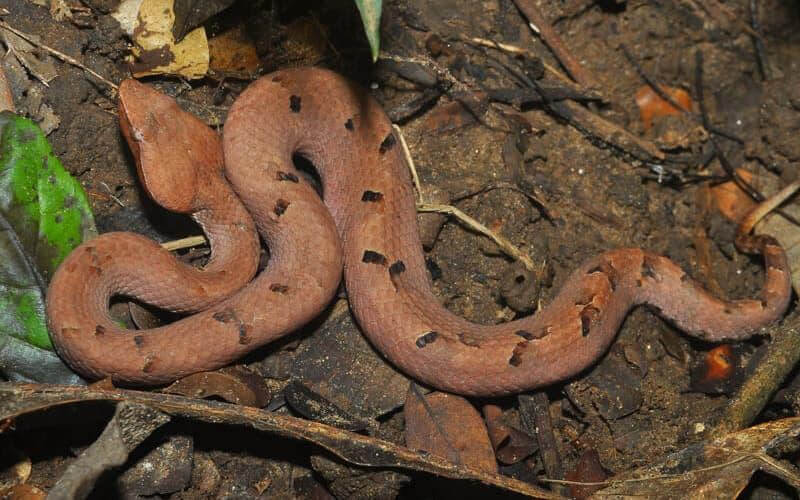
This small but venomous pit viper inhabits the forests of the Western Ghats and blends remarkably well with fallen leaves.
Its camouflage makes it difficult to spot while trekking.
Where You May Encounter It
- Rainforests
- Forest trails
- Plantations
- Leaf litter
- Hillsides
Interesting Facts
- Mostly nocturnal.
- Ambush predator.
- Excellent camouflage.
Bamboo Pit Viper (Craspedocephalus gramineus)
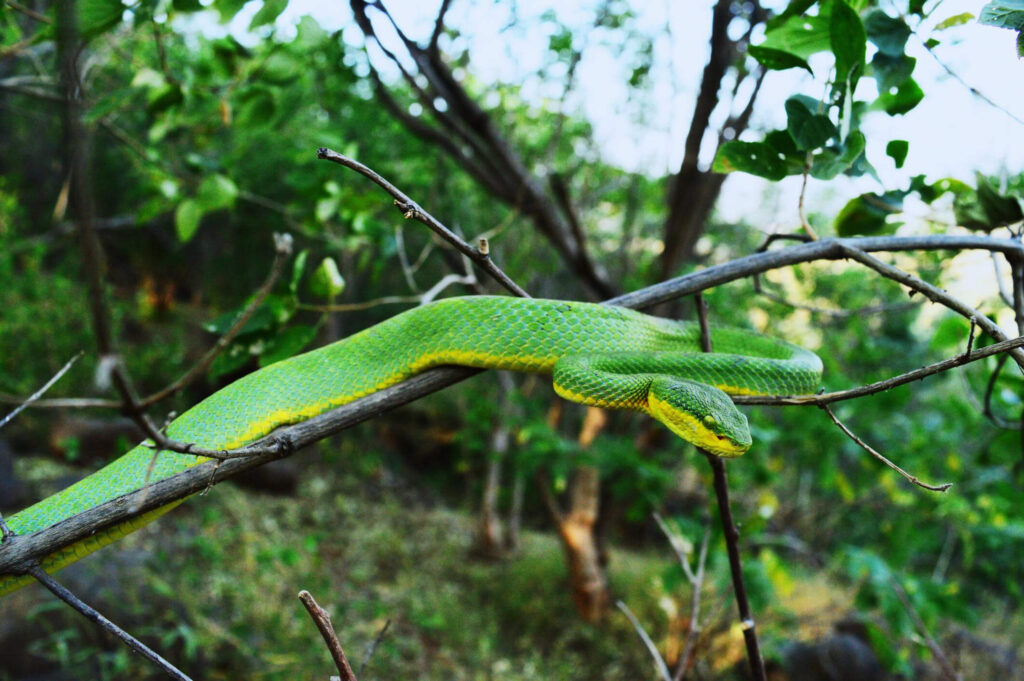
The Bamboo Pit Viper is one of India’s most beautiful snakes, thanks to its vivid green coloration.
It spends much of its time in shrubs and low tree branches, becoming more visible during the rainy season.
Where You May Encounter It
- Coffee plantations
- Forests
- Hills
- Evergreen forests
- Western Ghats
Interesting Facts
- Arboreal species.
- Uses heat-sensing pits to locate prey.
- Excellent climber.
Malabar Pit Viper (Craspedocephalus malabaricus)
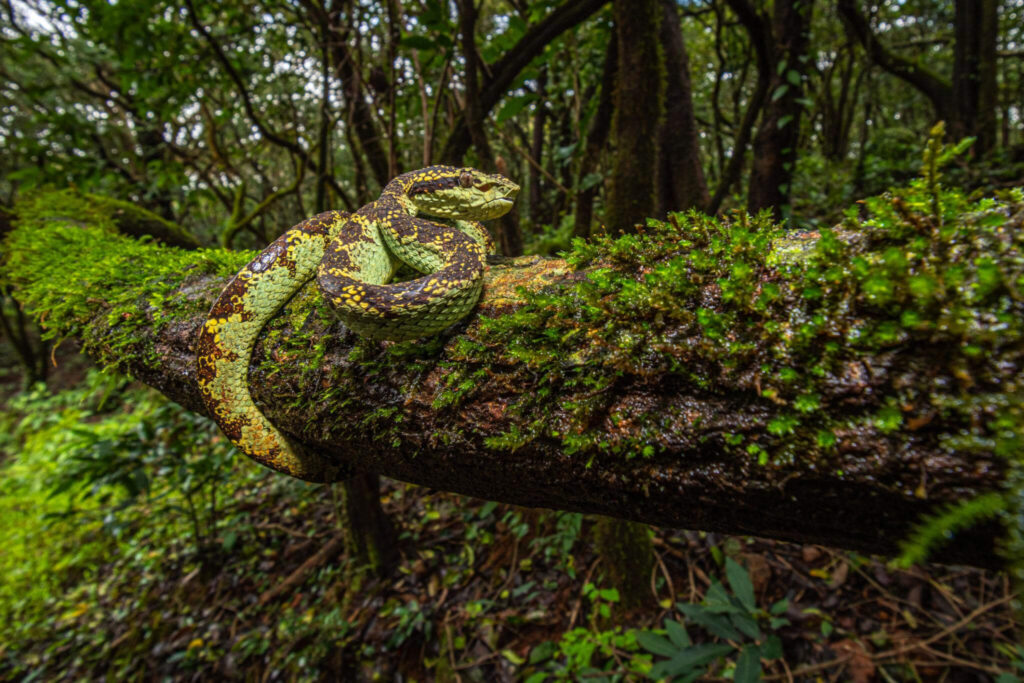
Endemic to India’s Western Ghats, the Malabar Pit Viper is among the most photogenic reptiles in the country.
It is especially active during monsoon when humidity levels are high.
Where You May Encounter It
- Streams
- Waterfalls
- Rainforests
- Nature trails
- Mountain forests
Interesting Facts
- Color varies from green to brown and yellow.
- Frequently spotted by wildlife photographers.
- Excellent camouflage among moss-covered rocks.
Why Snake Sightings Increase During the Monsoon
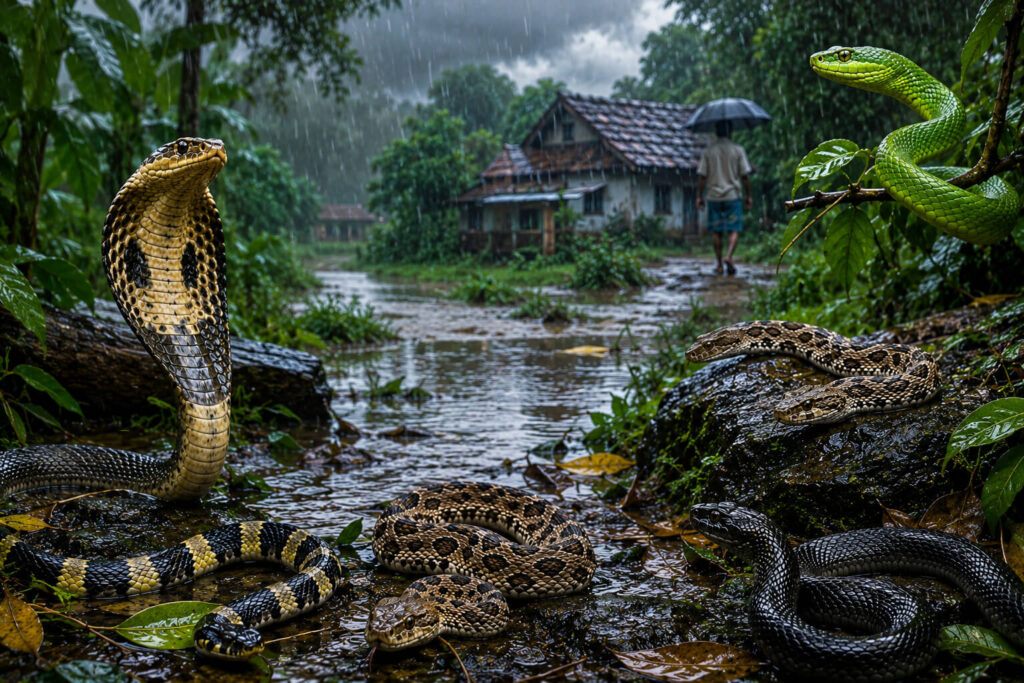
The rainy season floods underground burrows and nesting areas, forcing snakes to relocate in search of dry shelter. At the same time, frogs, rodents, and insects become more abundant, attracting snakes closer to agricultural land and residential areas.
This combination of habitat disturbance and increased food availability explains why sightings become more frequent between June and September.
Monsoon Snake Safety Tips
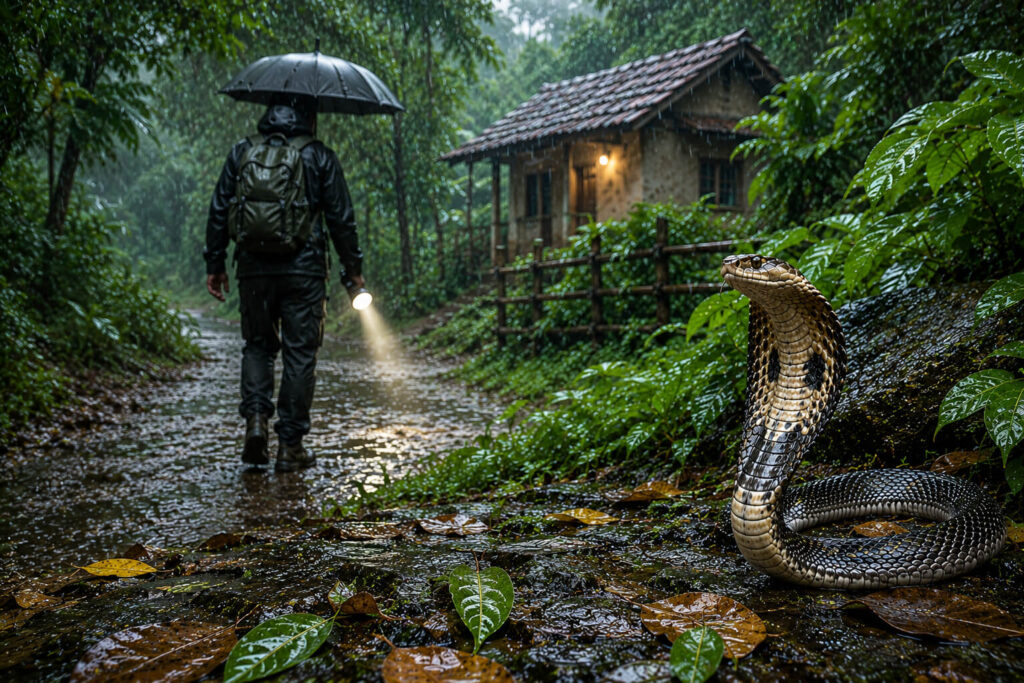
- Wear sturdy, closed-toe footwear while walking outdoors.
- Carry a flashlight when walking at night.
- Avoid tall grass and dense vegetation.
- Never place your hands into rock crevices or wood piles.
- Check shoes, bags, and camping gear before use.
- Keep your surroundings clean to discourage rodents.
- If you encounter a snake, stay calm and maintain a safe distance.
- Never attempt to capture or kill a snake.
- Contact the local Forest Department or an authorized wildlife rescuer if a snake enters your property.
What To Do If Bitten by a Snake
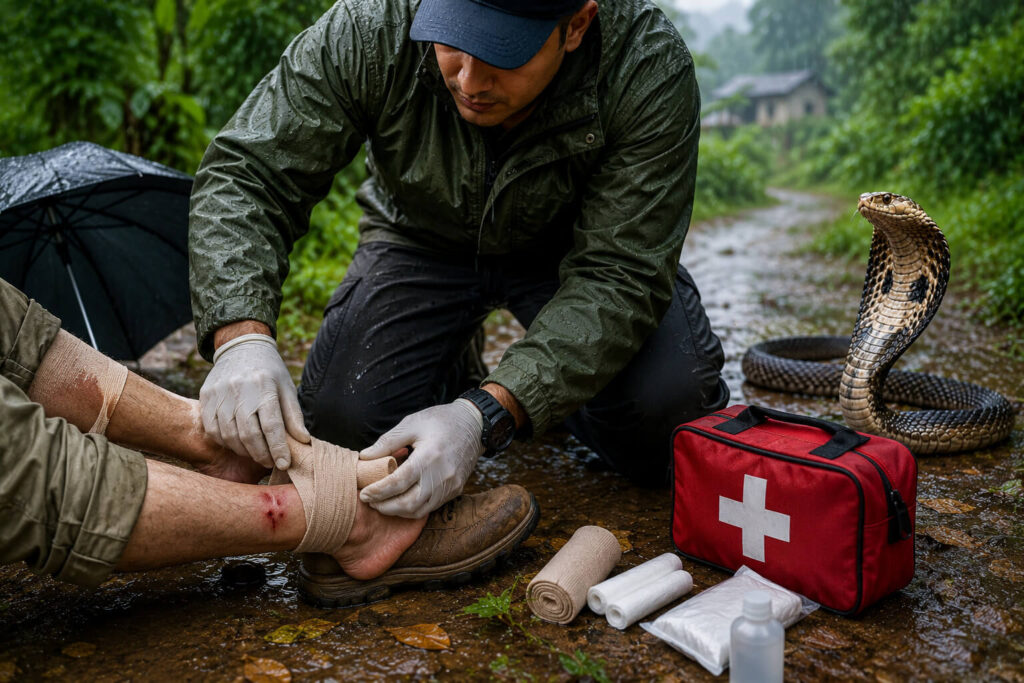
- Stay calm and limit movement.
- Keep the affected limb immobilized.
- Remove rings, watches, or tight clothing.
- Reach the nearest hospital immediately.
- Do not cut the wound.
- Do not suck out the venom.
- Do not apply ice or chemicals.
- Avoid relying on traditional remedies instead of medical treatment.
Final Thoughts
India’s remarkable biodiversity includes some of the world’s most fascinating snake species. While many venomous snakes become more visible during the monsoon, they are not naturally aggressive and generally avoid human contact whenever possible.
Whether you’re trekking through the Western Ghats, exploring national parks, photographing wildlife, or traveling through rural landscapes, awareness and respect for these reptiles can help ensure a safe and memorable experience. Understanding where these snakes live, recognizing their habitats, and following basic safety precautions are the best ways to enjoy India’s monsoon season responsibly.
FAQs About Venomous Snakes in India
Which is the most venomous snake in India?
The King Cobra is the longest venomous snake, while the Common Krait is considered among the most medically dangerous due to its extremely potent neurotoxic venom.
Why are snakes seen more during the rainy season?
Heavy rains flood their burrows and increase the availability of prey, forcing snakes to move into more open areas.
What are India’s “Big Four” snakes?
They are the Indian Cobra, Common Krait, Russell’s Viper, and Saw-scaled Viper.
Are all snakes found during monsoon venomous?
No. Most snakes in India are non-venomous and help control pests such as rats and mice.
Is it safe to trek during the monsoon?
Yes, provided you stay on marked trails, wear proper footwear, use a flashlight after dark, and remain alert in areas with dense vegetation.
